The Bain & Company metric that predicts B2B win rates
Most B2B marketing is built for one person: the decision maker. Find them, target them, hand them to sales.
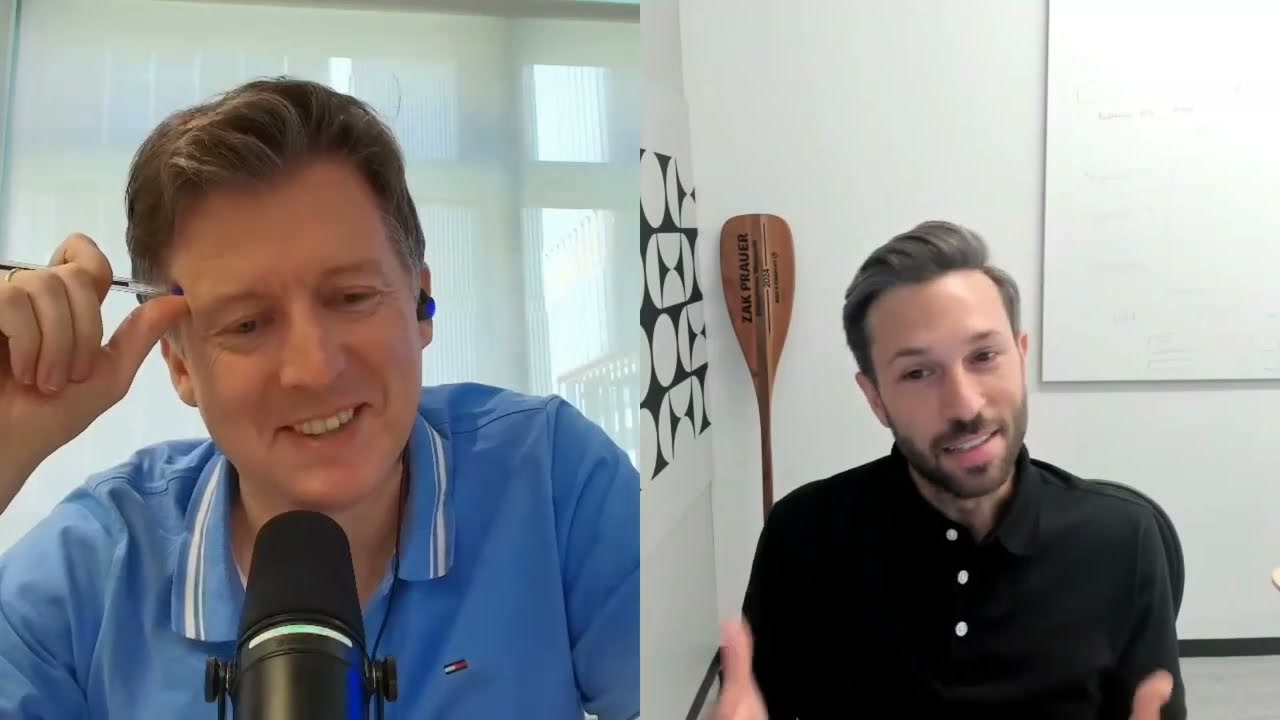
Zak Prauer, Partner at Bain & Company and co-author of Bain and LinkedIn's "Likelihood to Buy" research, joined me on the podcast to explain why that person only holds half the decision.
Here is what I took from the conversation.
Key Takeaways
- Bain and LinkedIn found two buying groups in upmarket B2B deals. Hidden buyers (finance, procurement, legal, operations) hold about half the decision power.
- Bain's likelihood to buy score has an exceptionally high correlation to win rates across the tech categories measured so far.
- 85% to 90% of buyers have a Day 1 list before contacting vendors, and around 85% buy from it.
- Once on the list, vendors win by building confidence on five points: safe choice, value, implementation, working relationship and functional fit.
- Bain could nearly perfectly predict the Day 1 list by running buying-committee personas through AI tools.
1. Two buying groups, split 50/50
Bain's research with LinkedIn found two distinct groups inside every upmarket deal.
Target buyers are the people marketing has always chased. The CRO's old instruction of "go find me the decision maker".
Hidden buyers are finance, procurement, legal and operations. They rarely show up in a campaign brief.
> "The target buyers who might be historically considered the decision maker actually only occupy about half of the decision making power, and hidden buyers have the remaining 50 percent."
They also care about different things. Target buyers want to know if the product works. Hidden buyers want to know if the decision is safe.
2. B2B buying is more emotional than consumer buying
This was the line that stuck with me.
> "B2B buying is actually a more emotional decision making process than a lot of consumer buying decisions are. The prospect of getting fired for making a bad decision is a really intense emotional thing."
Nobody gets fired for buying the category leader. If you are the challenger, your job is to make choosing you feel safe for everyone in the room, not just the person who loves your demo.
3. The metric: likelihood to buy
Bain built on its Net Promoter Score work and its Elements of Value framework to create a composite score called likelihood to buy. Zak says it has an exceptionally high correlation to win rates across the five or six tech categories they have measured so far.
It comes down to two moments of truth:
Moment one: are you on the Day 1 list? Somewhere between 85% and 90% of buyers have a list before they talk to any vendor, and depending on the category around 85% buy from it. Getting on it is a function of category fame and social proof. Do people like me vouch for you?
Moment two: can you build confidence across the whole buying group? Five things decide it:
- Are you a safe choice?
- Is there clear value and ROI, and do companies like mine say so?
- Can you implement in my environment?
- Can you work well with my team?
- Do you meet my functional needs?
> "Historically we've all kind of focused on this last one of features and benefits driving our go-to-market engine. In a world that is dominated by consensus decision making, it's only one of the five."
4. What winners do differently
The winners de-risk the decision for hidden buyers with social proof from their peers.
Zak's example: in workforce management software, the CFO is a hidden buyer. The ads that work show other CFOs at similar companies saying the challenger delivered more value than the category leader they switched from. Those ads drive far more engagement than features and benefits.
On the sales side, hidden buyers need to be in the cadence from the start, with messaging built for the role they play on the committee.
5. Where creators come in
I asked Zak whether B2B creators are part of this. His answer: social proof is how you get on the Day 1 list, and the way social proof gets built is moving to social as a new generation steps into buying roles.
> "The concept of having a credible voice for your brand that is somewhere between being able to offer scale in social environments while actually being thought of as a genuine subject matter expert is kind of the balancing act to strike right now."
In some companies the CMO becomes the chief influencer. Others hire people whose whole job is thought leadership.
6. LLMs as a brand health check
Bain ran the research a second way. They built synthetic personas for each role on the buying committee and had them query AI tools.
> "What we found is that we can nearly perfectly predict the Day 1 list."
What AI can't do yet is show how a vendor builds confidence once it is on the list. So AI visibility matters most for moment one. Brands that invested in content over the past decade have a head start.
7. Measure accounts, not leads
Zak's pick for the signal that matters: account engagement scores. Is the buying group at an account engaging more or less than before? With only about 5% of your market buying at any time, that is where the money should go.
And a line every RevOps team should hear:
> "Actually the leads are fine. The leads that get routed to the right people are the problem."
What this means if you sell to a buying committee
Bain's research says half the decision sits with people your marketing never reaches, and that those people buy on trust and peer proof.
We tested the same question from the creator side in the Kleos Trusted Voices Index. We measured which B2B voices on LinkedIn actually reach the buying committee. None of the top 20 reaches procurement. If your creator programme only reaches the target buyer, you are covering half the deal.
The full conversation with Zak is on the Not Just Ads podcast. Bain's research is here: Raising the odds on a deal: how likelihood to buy rewires B2B growth.
Marcus

Six years inside LinkedIn. $75M in ad spend managed. $700M in pipeline generated for HP, Expedia, Thomson Reuters and the London Stock Exchange. At Kleos, that operating knowledge is what every client gets specifically, how buying committees form preferences before the sales conversation starts. The same material I teach on the MBA programme at IE Business School.
Ready to reach your buying committee?
See how Kleos can help your brand become the most trusted voice in your market.
Work with Kleos