Robin Daniels on Category Creation and B2B Storytelling
KEY TAKEAWAYS
- A strong B2B go-to-market strategy requires three channels running in parallel: paid, organic and community. Relying on one is the fastest way to create a fragile pipeline.
- Paid marketing gets you volume fast but rarely gets you the right buyers. Organic marketing takes longer but attracts higher quality. Community marketing is the slowest to build and the hardest to crack but once it works, it compounds in ways nothing else does.
- Category creation is not a marketing strategy. It is a company strategy. If only your marketing team believes in it, it will never gain traction with buyers.
- The best B2B marketing borrows from B2C. Emotional engagement comes before rational decision-making every time. If buyers are not emotionally invested, they will switch the moment something cheaper appears.
- Courage is the most underrated ingredient in B2B marketing. Doing more of the same produces more of the same. The companies that win categories are the ones willing to tell a story nobody else is telling.
- Authenticity is not a branding word. It is a commercial protection mechanism. Audiences can tell when a creator or a leader is posting something they do not actually believe. That kind of misalignment destroys trust faster than any bad ad.
- SEO as we know it is changing fast. The brands that win the next five years will be the ones showing up clearly and consistently inside the LLMs their buyers are already using.
Robin Daniels has been inside some of the most important rooms in B2B marketing over the past 25 years. Salesforce when it was still fighting Oracle for credibility. LinkedIn when it was building the category it now defines. WeWork at its peak. Matterport on the way to IPO. Three CMO roles. Now Chief Business Officer at Zensei, where he is trying to do something even harder than scaling a known brand — he is creating a new category from scratch.
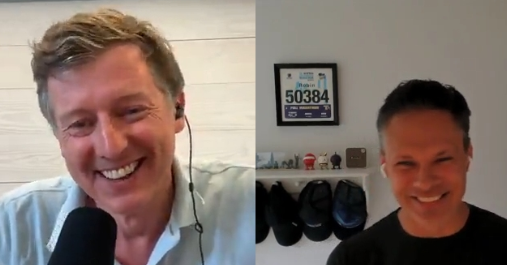
I sat down with Robin on the Not Just Ads podcast and came away with a clearer picture of what separates the B2B brands that generate real pipeline from the ones that generate noise.
Here is what stood out.
Your Go-To-Market Needs Three Channels, Not One
Robin breaks go-to-market down into three buckets: paid, organic and community.
Paid gets you volume. It is predictable, scalable and expensive. The quality is inconsistent and the moment you stop spending, the pipeline stops too. Most B2B teams treat this as the engine. It is actually the backup generator.
Organic marketing — storytelling, content, LinkedIn, podcast, thought leadership — attracts higher quality buyers. They come to you because what you are saying resonates. The downside is time. You cannot promise your CEO 100 qualified leads by Friday through organic content alone.
Community marketing is the slowest and the hardest. It requires showing up where your buyers are, doing things that do not scale. At Salesforce in the early days, Robin and his team were on the road visiting small cities across the US and Europe, running customer success tours, meeting people face to face, building the kind of trust that no Google ad can replicate. It took years. The customers they won that way became their biggest advocates and stayed.
The point is not to choose one. The point is to run all three. They operate on different timelines. Paid works this quarter. Organic builds over the next year. Community compounds over years. A marketing strategy that only optimises for speed leaves the most valuable pipeline on the table.
Category Creation Starts Inside the Building
Robin has led category creation at multiple companies and the lesson is always the same. It cannot be a marketing project. It has to be a company movement.
If your positioning is something only the marketing team believes, buyers will not feel it. The energy does not carry. Category creation works when everyone in the company — not just the CMO — can articulate what the new category is, why it matters and why your company is the one to define it.
At Zensei, the category Robin is building is called Human Success. The insight behind it is blunt: 70 percent of people are disengaged at work. Not because the work is bad. Because they do not feel supported, they are not growing and they have no sense of forward momentum. Zensei's platform is built around changing that. But the category only gains traction if the whole company tells that story, not just the slides in a sales deck.
The test Robin uses is simple. When you tell someone about your category, do they want to go tell someone else? If the answer is no, you are not there yet.
B2B Brands That Win Markets Think Like B2C
Robin has spent his entire career in B2B but he has always operated with a B2C mindset. The reason is straightforward. Buying decisions are made by people. People are emotional before they are rational. If you cannot get someone emotionally engaged with what you are doing, they will never be a genuine advocate for your brand — and they will leave the moment a cheaper or newer option appears.
This is why the Sensei cycling docu-series he launched — Cranked Up, following a Division III women's cycling team — works as a B2B marketing move even though it looks like a sports content play on the surface. It is not about the product. It is about the values the product represents. Human growth. Camaraderie. Small daily steps toward something bigger. It generated close to a quarter of a million views in the first month, distributed entirely through LinkedIn and the team's own channels.
That is what brand investment looks like when you do not have the budget to outspend your category leaders on Google and LinkedIn ads.
Courage Is the Channel Nobody Talks About
This was the sharpest moment in the conversation. Robin's view is that courage is the most underused asset in B2B marketing.
Not boldness for its own sake. Not contrarianism. The specific courage required to stop doing what everyone else is doing when you can see it is not working.
Most B2B brands are producing content that is technically correct and completely forgettable. White papers. Case studies with a single camera on a happy customer. LinkedIn posts that read like press releases. None of it breaks through because none of it requires anything from the person who made it.
The brands and the leaders who build genuine market authority are the ones willing to say something specific, stand behind it and repeat it consistently until the market starts repeating it back. That is category creation in practice. It does not require a big budget. It requires a point of view and the willingness to stick with it when the early signals are slow.
The Authenticity Question in B2B Influencer Marketing
We talked about the creator economy and Robin was refreshingly honest. He has tried B2B influencer marketing with mixed results. His hesitation is not about the channel — he understands the power of it. His hesitation is about the mechanism.
When a creator posts about a product they do not genuinely use or believe in, audiences can tell. Not immediately, but over time the signal degrades. The creator loses trust. The brand gets associated with that loss of trust. The short-term reach is not worth the long-term damage.
This is why the most effective B2B influencer campaigns are built on alignment, not just reach. The creator needs to have a genuine relationship with the problem your product solves. Their audience needs to be the audience that has that problem. When those two things are true, the content does not feel like B2B influencer marketing. It feels like a recommendation from someone who knows what they are talking about. That is what reaches a buying committee before the sales team does.
What Changes in the Next Five Years
Robin does not pretend to have a complete map of where B2B marketing is headed. But he is clear about one thing: the way buyers find and evaluate solutions is changing faster than most marketing teams are moving.
LLMs are already part of how buyers research options. Showing up clearly and consistently inside those systems is becoming as important as SEO used to be and far fewer B2B teams are paying serious attention to it yet. The brands that get ahead of this will not need to outspend the competition. They will be the default answer before the conversation with sales even starts.
Storytelling remains the constant. Every platform, every format, every algorithm change the brands that win are the ones that have something genuinely worth saying and the courage to say it consistently.
If you are a B2B founder or CMO trying to reach your buying committee before your competitors do, that is where the work starts.

Six years inside LinkedIn. $75M in ad spend managed. $700M in pipeline generated for HP, Expedia, Thomson Reuters and the London Stock Exchange. At Kleos, that operating knowledge is what every client gets specifically, how buying committees form preferences before the sales conversation starts. The same material I teach on the MBA programme at IE Business School.
Ready to reach your buying committee?
See how Kleos can help your brand become the most trusted voice in your market.
Work with Kleos